Printable Binary Logic Worksheets
Build Binary Logic puzzle and answer pages for A4 or US Letter.
Quick start
Apply a common puzzle, layout, and output configuration in one step.
Applied: Home practice
Print settings
Beginner · 4 puzzles · A4 · 2/page
Print preview
Output summary
- Puzzles
- 4
- Puzzle pages
- 2
- Answer pages
- 1
- Total pages
- 3
- Paper
- A4 · Portrait
- Puzzles per page
- 2
- Output style
- Color
Print & download
Preparing preview…
Start in three steps

Choose a practice set
Pick a real 4×4 or 6×6 level, puzzle count, symbols, paper, and answer options.

Check the preview
Confirm the symbol key, board size, page count, and worked example before printing.
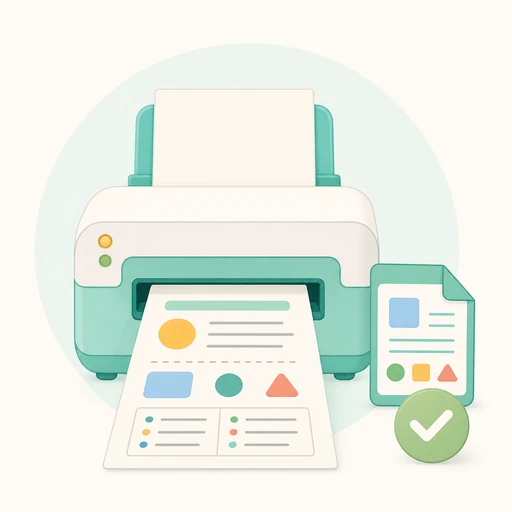
Print or save the set
Use browser Print or vector PDF after the current validated preview is ready.
Choose the right support strength
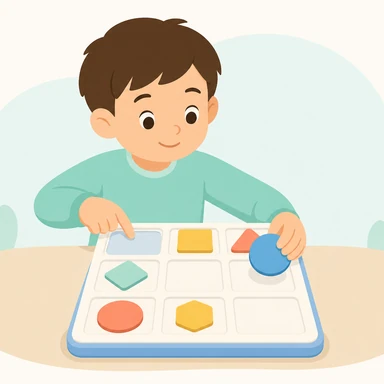
Guided introduction
Use the Rules Introduction preset for one 4×4 board, visible rules, and a worked example.
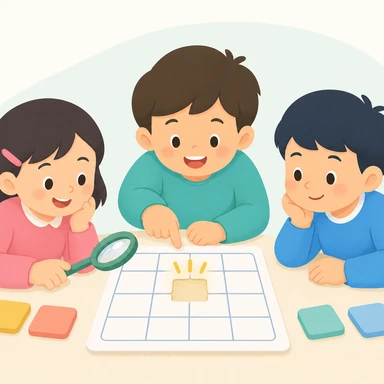
Light support
Keep the symbol key and rules visible while children complete a same-level home set.
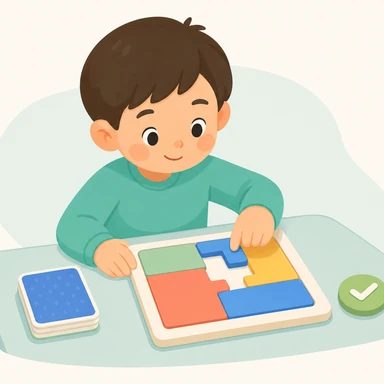
Independent practice
Use a classroom set with answers kept on separate pages for later checking.
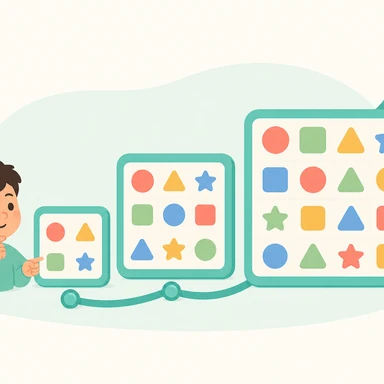
Progressive challenge
Move from supported 4×4 boards to admitted 6×6 reasoning without opening larger grids.
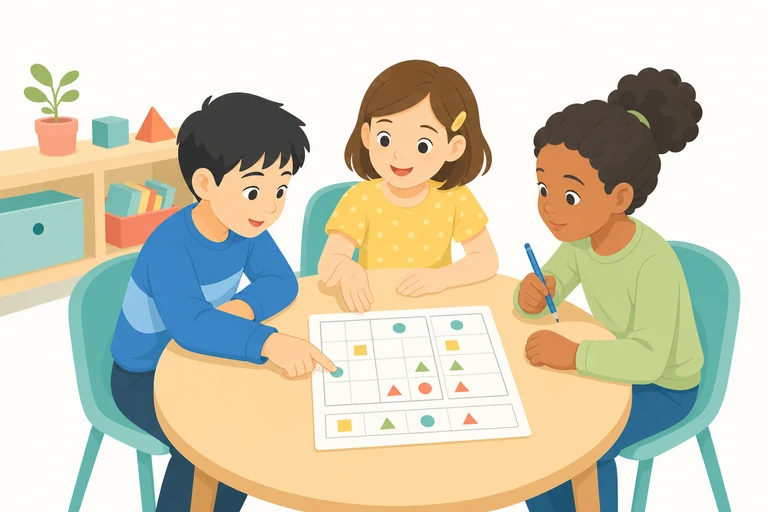
Suitable learning settings


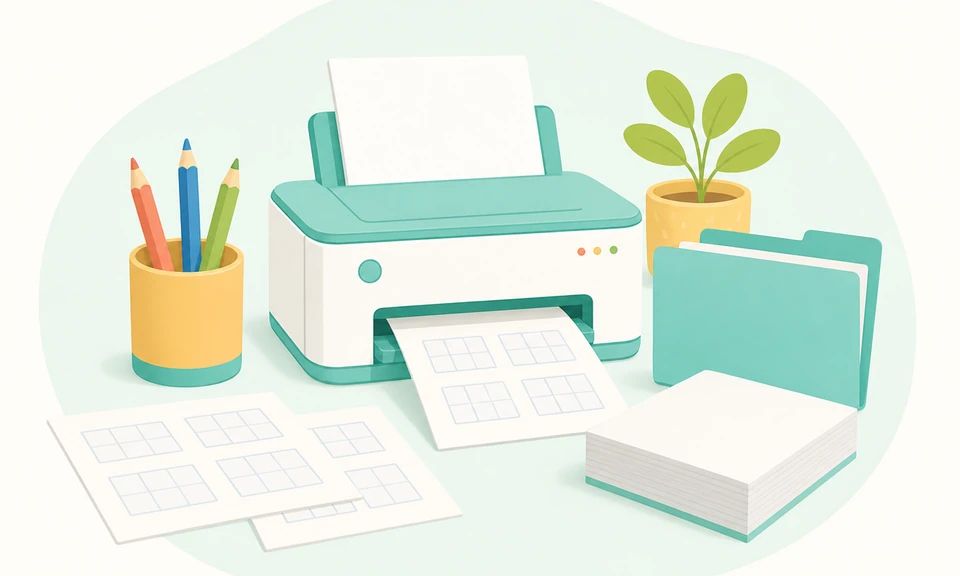
Printing and use tips
- Keep symbols easy to scanUse color for first practice or low-ink and line-art when strong outlines are enough.
- Use pencil for reasoningLet children mark uncertain cells lightly and erase revisions without damaging the board.
- Keep answers separatePrint answer pages for later checking instead of leaving them beside the active puzzle.
What children practise

Rule-based deduction
Every move can be linked to a visible count, pattern, or line comparison.

Two-direction attention
Rows and columns must be checked together rather than solved in isolation.

Focused self-checking
Children sustain attention, compare with answers, and revise a mistaken move.
Use the printed sheet in three steps

Observe one useful line
Circle or point to a row or column with enough given symbols to reveal a pattern.

Solve and explain
Place one symbol only after naming the count, no-three, or different-line rule.
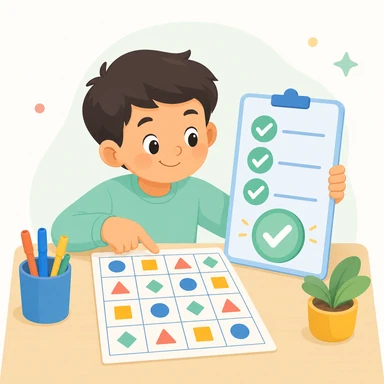
Check and reflect
Compare with the separate answer page and revisit the first move that went wrong.
Ready to reason?
Start with one legal move
Open the focused board, choose a symbol, and explain the row or column rule behind your next move.
Binary Logic questions
Is Binary Logic a maths test?
Does a hint fill the cell for the learner?
What makes a puzzle harder?
Can I print the exact puzzle I am playing?
Are 8×8 or 10×10 boards available?
Continue the logic practice
Try another real logic puzzle from the current bilingual puzzle collection.