The learner is writing whole words for the first time
Recommended worksheet
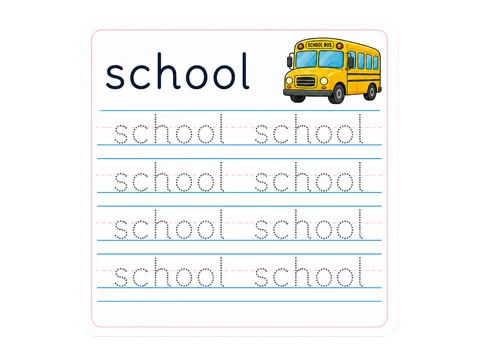
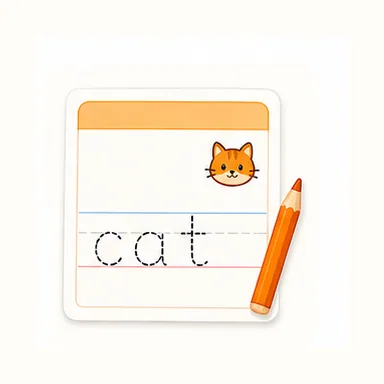
Simple English Word Tracing Worksheet
Short words keep the sequence compact and make it easier to notice where each letter belongs.
Start hereFrom letter sequences to independent words
Compare simple words, themed vocabulary, two sight-word levels, and trace-and-copy practice to reduce handwriting prompts in manageable steps.
Choose a familiar word set first, then increase vocabulary level or reduce tracing support as letter order becomes steadier.
Short words such as cat, dog, and sun keep the letter sequence compact for first whole-word handwriting practice.
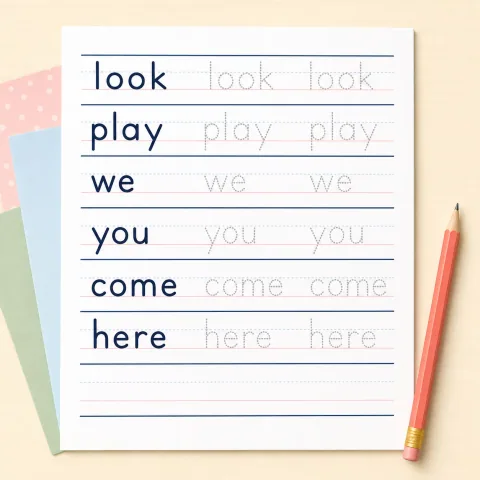
The pre-primer set introduces an early group of frequently encountered English words for guided handwriting.
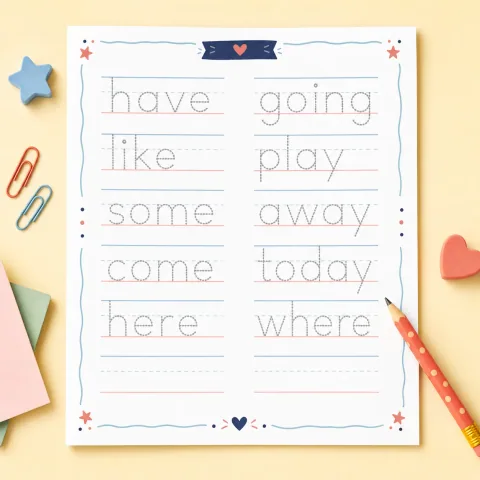
Primer words add a larger and more advanced set after the earliest high-frequency forms feel familiar.
Color words provide a small, meaningful vocabulary theme when learners benefit from a concrete topic.
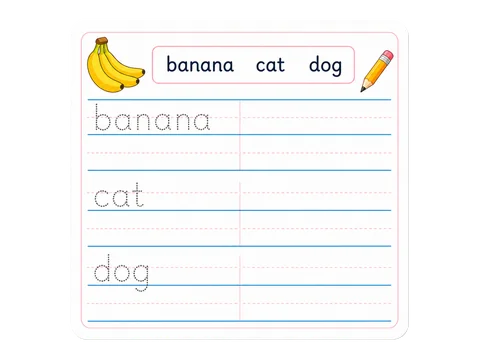
A trace-then-copy format keeps one model visible while adding space for a more independent attempt.
Match the word set to what the learner already recognizes, then choose how much writing guidance is needed.

Recommended worksheet
Simple English Word Tracing Worksheet
Short words keep the sequence compact and make it easier to notice where each letter belongs.
Start hereRecommended worksheet
Dolch Pre-Primer Sight Word Tracing Worksheet
The pre-primer set provides an earlier, smaller step before the more advanced primer list.
Start hereRecommended worksheet
Dolch Primer Sight Word Tracing Worksheet
Primer words extend the high-frequency set while keeping the same guided handwriting format.
Start hereRecommended worksheet
Trace and Copy Words Worksheet
The model remains visible, but blank lines require the learner to rebuild the word with less support.
Start hereStart with a manageable word set, increase the level, then reduce the amount of tracing support.
Begin with short familiar words or the earliest guided sight-word set.
Explore practice Add a broader high-frequency set after the entry-level forms feel familiar.
Explore practice Keep one model, then rebuild the word independently on a blank guide line.
Explore practice Use custom English word lists and fewer tracing rows for less-guided writing.
Explore practiceMove on when the learner can recognize most current words and keep their letter order while tracing. Word recognition and handwriting can develop at different speeds, so repeat familiar sets when needed.
Choose a preset or enter custom words, then adjust words per page, layout, writing size, repetition, and practice mode.
Available in the generator
Word source
Preset or custom list
Words per page
Adjust page density
Layout
One or two per row
Practice mode
Trace, trace + write, or blank
Become familiar with the overall visual form of simple and frequent words.
Keep each letter in the correct sequence while tracing and copying.
See pre-primer and primer words repeatedly in a consistent writing format.
Reduce tracing prompts and rebuild familiar words on blank guide lines.
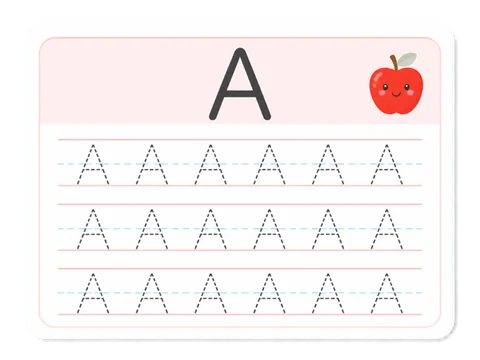
Review the foundation
Return to uppercase, lowercase, or paired forms when individual letters need attention.
Explore practice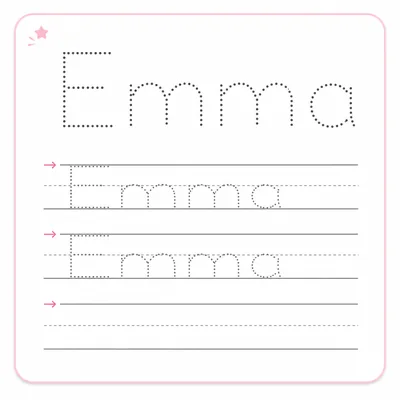
Use familiar personal text
Practice a meaningful first or full name with adjustable tracing support.
Explore practice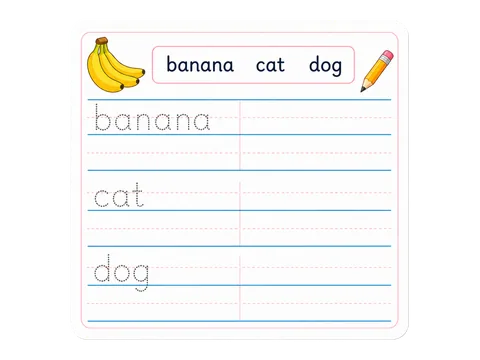
Adjacent vocabulary
Apply word tracing to written number forms such as one, two, and three.
Explore practiceMore printable practice
Browse released printables that work alongside tracing practice at home or in class.