A good fit when
- The current targets come from the Dolch primer level
- The learner can trace short words with the selected guides
- A broader editable word set is needed
- Reading review includes a short writing task
Start with a focused set of Dolch primer sight words. Edit the English word list, choose the layout and guidance, then preview the worksheet before printing.
Use this template when the lesson calls for a selected, editable group from the Dolch primer level.
Primer words are a larger step than pre-primer, so keep each worksheet selective rather than loading the entire list at once.
Say it in a short oral phrase or point to it in reading material before studying the printed form.
Follow the complete sequence on the handwriting guides and keep the letters grouped as one word.
Use trace-and-write for a familiar word, then check letter order against the printed model.
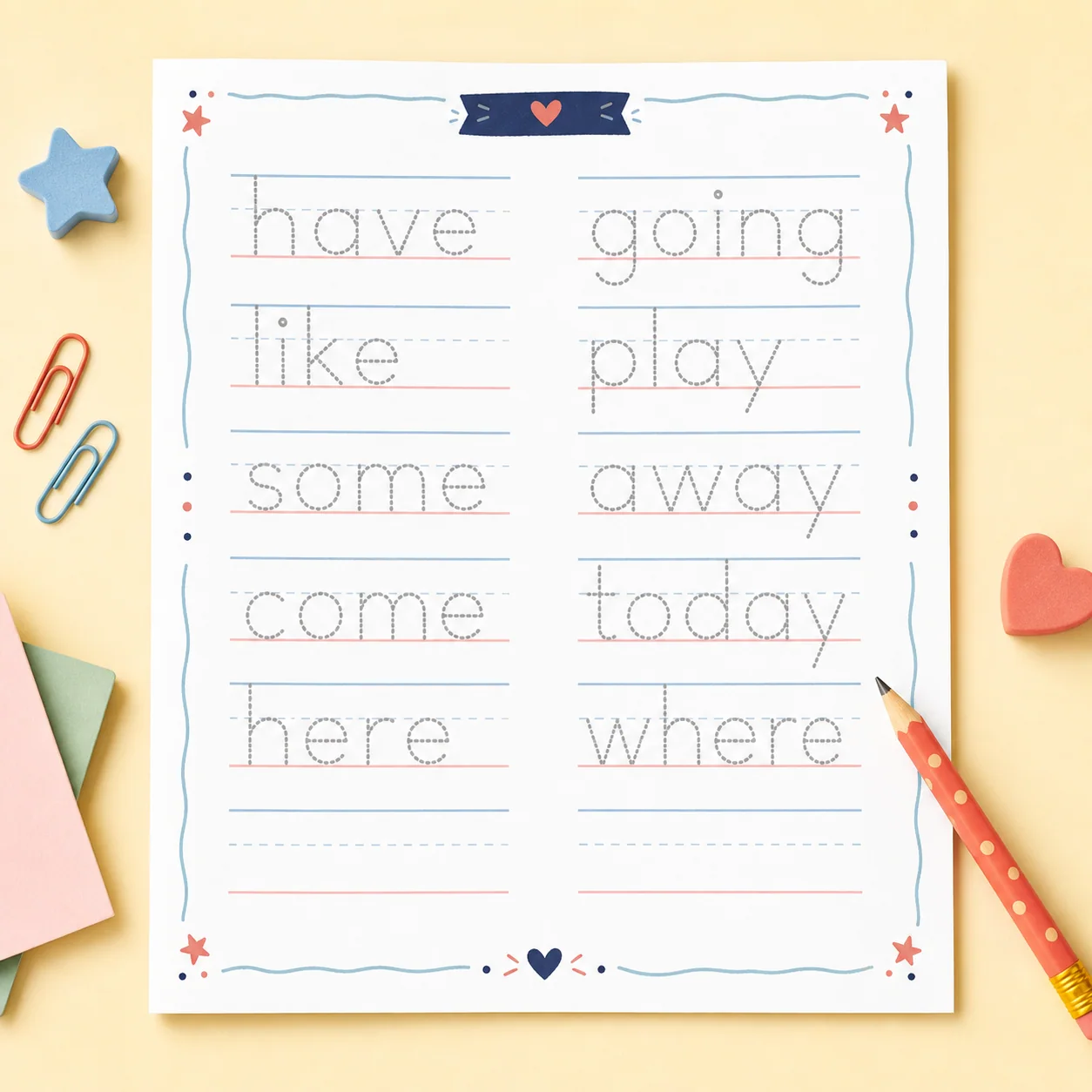
The generator loads an editable selection from the Dolch primer list.
Words can be removed, reordered, or replaced for the current lesson.
Repetition remains adjustable for words that need additional exposure.
One- or two-word rows can match word length and writing size.
Choose trace-only, trace-and-write, or blank writing, then adjust the page before printing.
A larger common-word set extends the earliest sight-word foundation.
Tracing supports accurate order across more varied word lengths.
Letters are kept together without collapsing into one crowded shape.
Repeated words practice lowercase size and baseline placement across a line.
Trace-and-write adds a check of how much of the word can be produced independently.
An editable list lets the worksheet follow the current reading sequence instead of a fixed full-page dump.
Tracing gives extra exposure to words that are longer or less visually simple than pre-primer items.
Practice mode can shift from complete tracing to copied words before support is removed.
Primer practice works best when the selected list and layout match current reading targets.
Keep only the current target words and lower the number of words per page.
Use one word per row or choose a smaller writing size after checking readability.
Increase repetition for the reduced list instead of adding more different words.
Use trace-and-write and compare the independent copy with the printed model.
Advance when selected primer words are recognized in reading and their letter sequences can be copied with limited tracing.
Use a short current list and enough spacing for careful guided writing.
Combine familiar and newer items while adding one independent copy.
Move to a less-guided format when common primer words can be recalled accurately.
Step back to the entry list, increase independent writing, or use a concrete themed vocabulary set.
Pre-primer
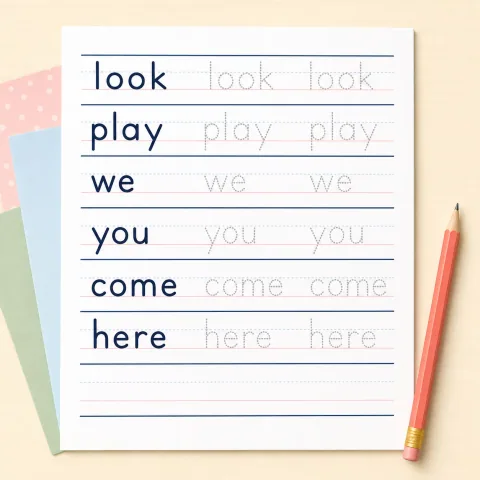
Start with a focused set of Dolch pre-primer sight words for guided handwriting.
Open template arrow_forward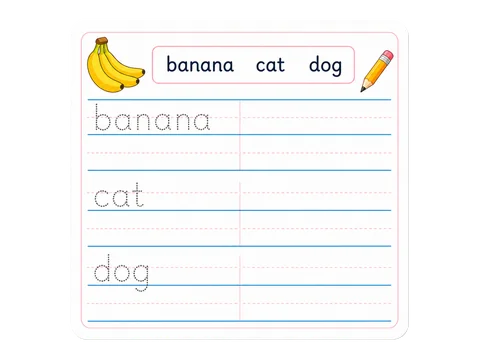
Less-guided writing
Trace each English word from a model, then copy it on a less-guided line.
Open template arrow_forward
Theme vocabulary
Trace common English color words such as red, blue, and green with an editable list.
Open template arrow_forward