A good fit when
- The current targets come from the Dolch pre-primer level
- The lesson uses a selected subset instead of the full list
- The learner can trace lowercase letters on guidelines
- Reading review and handwriting are being paired
Start with a focused set of Dolch pre-primer sight words. Edit the English word list, choose the layout and guidance, then preview the worksheet before printing.
Use this entry-level set when a learner is beginning to notice common printed words and can manage a short handwriting task.
Keep the focus on a small group of common words. Tracing supports their letter sequence, but it does not replace reading instruction.
Say the printed word together and notice its first letter and overall length before tracing.
Follow the light word from left to right, keeping the letters in order and on the guidelines.
When recognition is becoming quicker, use trace-and-write for a single independent attempt.
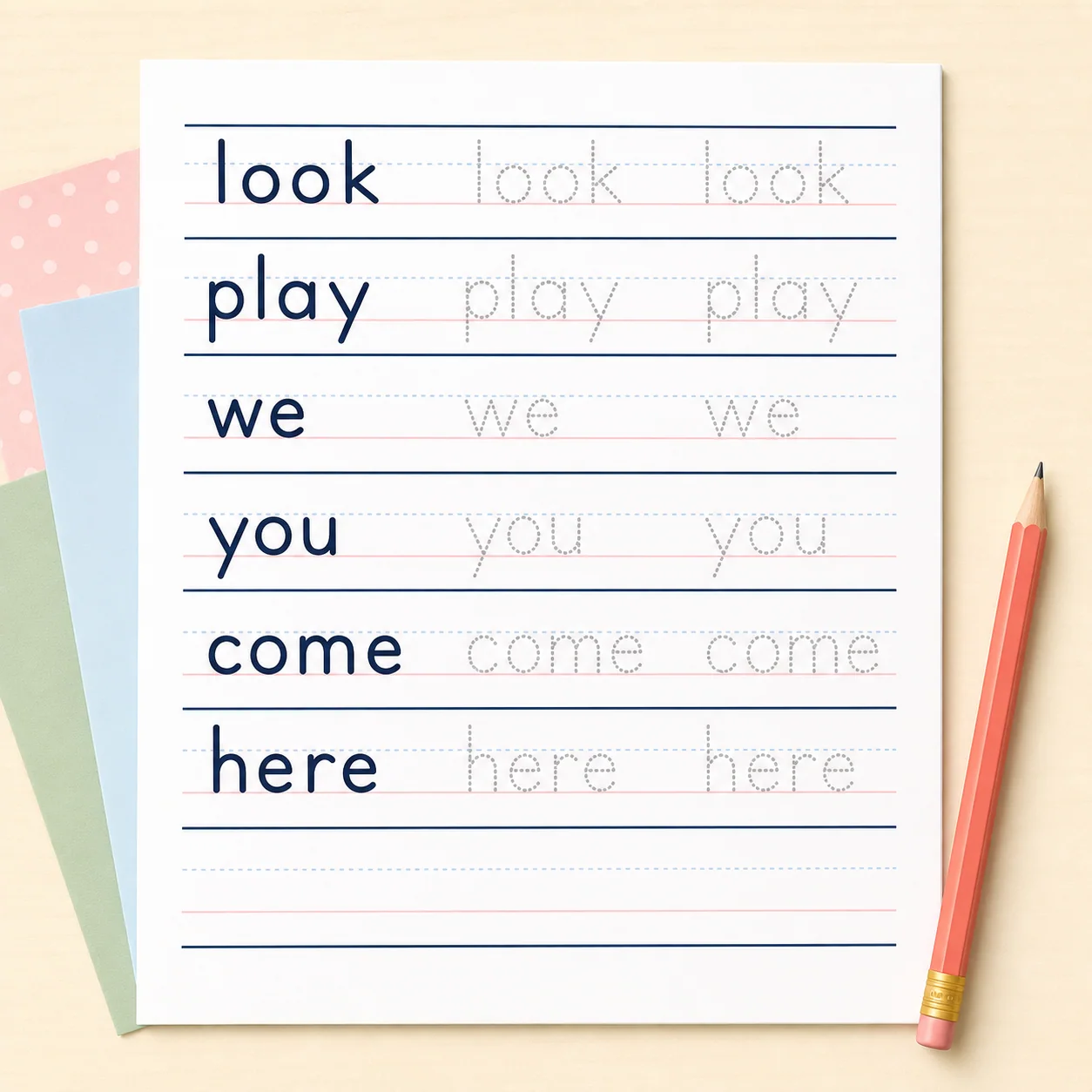
The generator loads an editable selection from the Dolch pre-primer list.
Keep the preset words or replace them with the exact items being taught.
Each selected word can repeat according to the word repetition control.
Choose how target words share each worksheet row.
Writing size, words per page, paper size, and practice mode remain adjustable.
The same small word set appears across rows for visual comparison.
Each model keeps the word’s letters in a consistent left-to-right order.
The learner practices keeping letters close enough to read as one word.
Guidelines support familiar lowercase forms within a meaningful word.
Trace-and-write adds a less-guided writing line after the model.
It adds handwriting repetition to a reading routine without claiming that tracing alone teaches comprehension or fluent reading.
A short selected list reduces visual load and makes review easier to repeat.
Reading before tracing links the printed word with the movement through its sequence.
Words per page and practice mode can change before moving to the larger primer set.
Adjust the word list, page density, and writing size to keep the worksheet readable.
Edit the word list and reduce words per page to the few targets being reviewed.
Switch to one word per row and use a larger writing size.
Keep only that word or shorten the list, then increase the repetition setting for the worksheet.
Use trace-and-write for one independent copy after each guided example.
Move forward when the learner recognizes the selected words across reading activities and can preserve their letter order with less tracing.
Use a small current target set, clear guides, and trace-only practice.
Keep a short list and add trace-and-write after recognition becomes quicker.
Move to a broader list or a less-guided format when pre-primer words are familiar.
Choose the next level of sight words, switch to decodable short words, or increase independent writing.
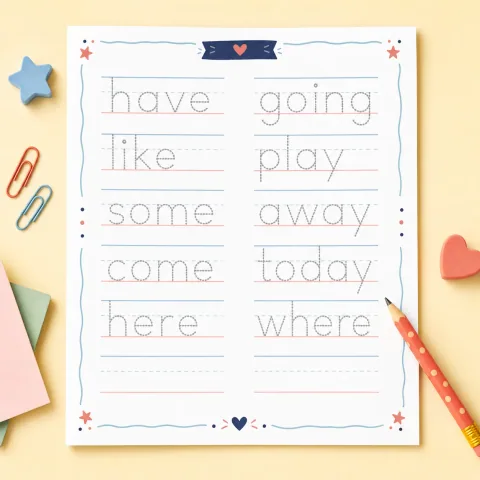
Primer
Start with a focused set of Dolch primer sight words for guided handwriting.
Open template arrow_forward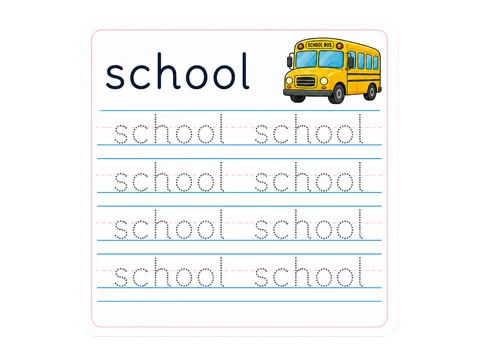
Phonics-friendly words
Trace short English words such as cat, dog, and sun with an editable word list.
Open template arrow_forward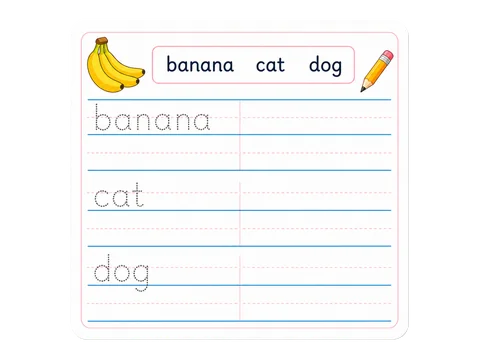
Less-guided writing
Trace each English word from a model, then copy it on a less-guided line.
Open template arrow_forward