A first number-clue puzzle
Play a 5×5 Nonogram Online
Play a 5×5 Nonogram online: read each row and column clue, fill only the squares you can prove, and reveal the hidden picture.
- Reviewed 5×5 boards
- Three-stage hints
- Keyboard & touch
Learn with the board
Solve a Mini Nonogram in four steps
Read one clue, record only certain cells, and let each result unlock the crossing direction.
Read one clue line
A number tells you how many neighboring squares form one filled run.
Fill what must be filled
Compare every legal placement and keep only the squares they share.
Mark impossible cells
Use X to record squares that cannot belong to the completed run.
Cross-check the other way
Carry the new evidence into crossing rows or columns until the picture appears.
Four ideas to remember
Every mark needs a reason
These four board views show the complete rule set children use in the real 5×5 workspace.
One number, one run
A clue of 3 means exactly three touching filled squares in that line.
Separate multiple runs
Clues such as 1 2 need at least one empty square between their runs.
X means definitely empty
An X is useful evidence: it closes a run and narrows the crossing line.
Rows and columns agree
A completed board must satisfy every clue in both directions.
Choose a comfortable start
One 5×5 size, three reasoning levels
The puzzle stays at 5×5. Difficulty changes through the clue structure and solving steps, not smaller touch targets.
First Picture
5×5Start here
More immediate clue lines and a shorter path to the hidden picture.
Beginner
5×5For children who know fill and X
Combine simple placements with a few row-and-column cross-checks.
Challenge
5×5For patient independent reasoning
Fewer immediate lines and a longer no-guess chain on the same readable grid.

Take the reasoning offline
Print Mini Nonogram practice
Create real puzzle sheets from the same validated Definition and Document pipeline used by the product.
- A4 and US Letter
- Color, low-ink, and line-art
- Optional worked example and answer pages
- Single puzzles or classroom sets
What children practise
Logical deduction
Build a complete picture from small, explainable conclusions.
Visual scanning
Track clue groups, filled runs, and empty evidence across a compact grid.
Careful checking
Verify each mark against both its row and its column.
Ways to use Mini Nonograms
Ready to reason?
Reveal a picture one certain mark at a time
Open the 5×5 workspace, choose a real level and guidance mode, and start from the clearest clue.
Mini Nonogram questions
What age is Mini Nonogram for?
Does a child need to read words?
Does every puzzle have one answer?
What should we do when stuck?
Can I print more practice?
Are larger grids available?
Continue with logic puzzles
Move from picture clues to other real visual and grid-based reasoning activities.
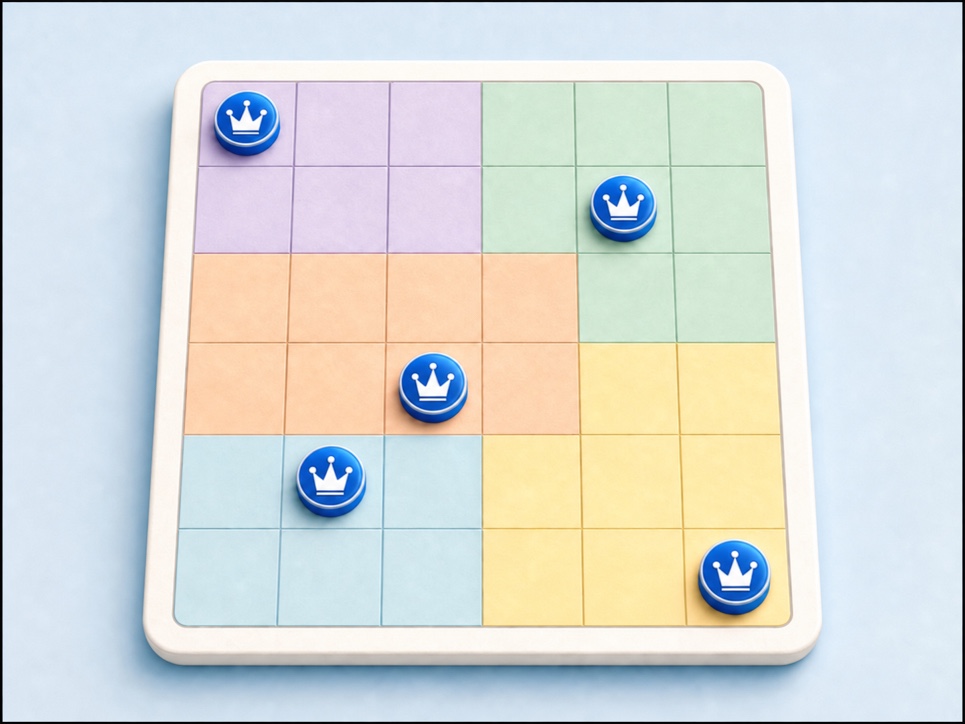 Queens PuzzlePlace one flower in every row, column, and colored region using logic and elimination.Open
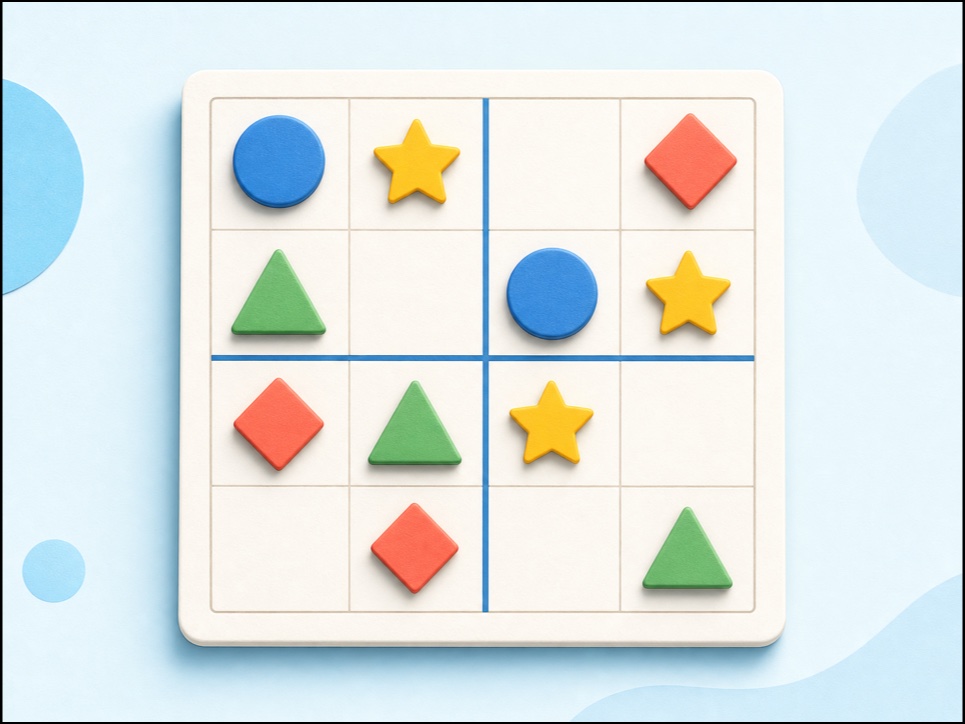 Picture SudokuPlay child-friendly 3×3 and 4×4 picture sudoku with shapes, keyboard and touch controls, hints, undo, and no sign-up.Open
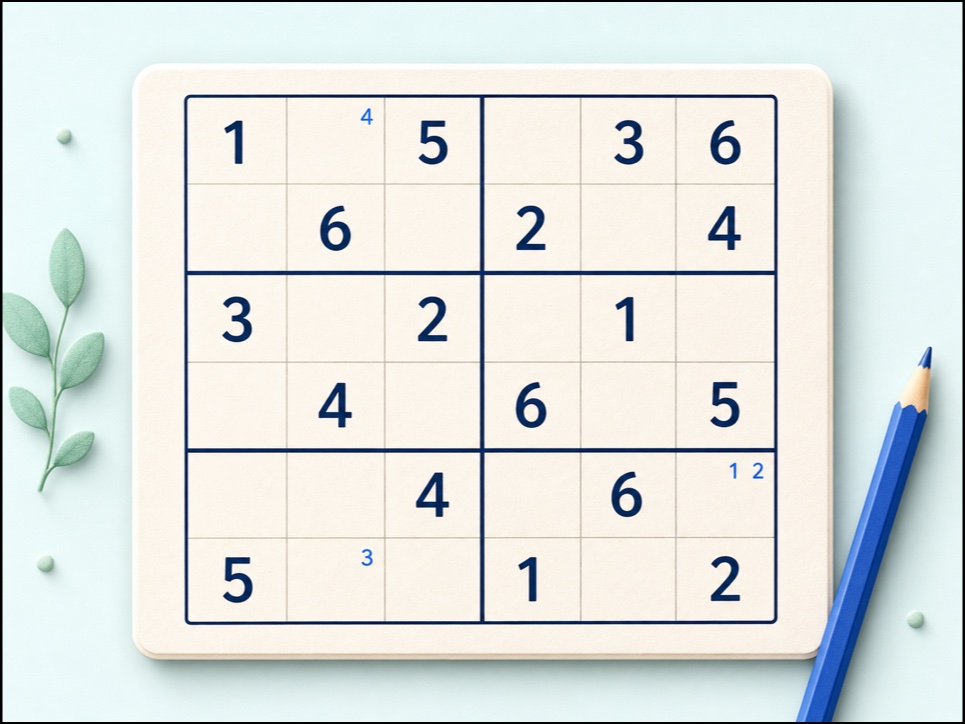 Classic 6x6 SudokuSolve child-friendly 6x6 Sudoku with digits 1-6, 2x3 boxes, notes, keyboard controls, checking, hints, undo, and redo.Open