A good fit when
- A first name can already be traced with some control
- School forms or sign-in tasks require a full name
- The learner is ready for a longer writing sequence
- Word spacing needs gentle practice
Enter a first and last name using A–Z letters, then adjust the writing size, rows, orientation, and trace-or-write mode before printing.
Choose it after first-name writing feels familiar and the learner is ready to manage a second word and the space between names.
Treat the full name as two connected parts so the learner can preserve letter order, spacing, and steady size.
Read the full name and point out where the first part ends and the surname begins.
Follow the light letters and pause at the space between the two name parts.
Use the blank practice line in trace-and-write mode to copy both name parts with the same spacing.
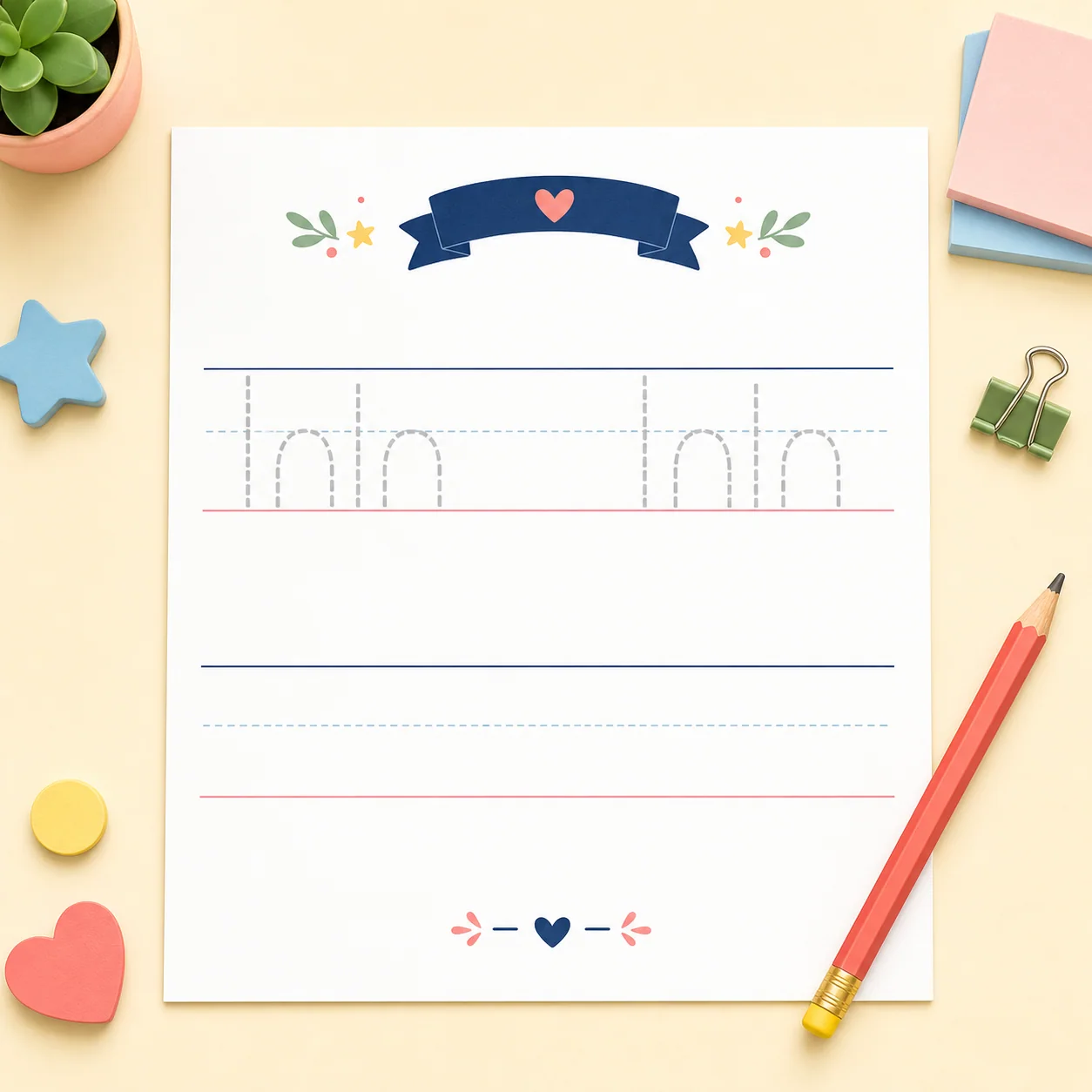
Enter the first and last name together in the name field.
The space typed between the two names remains part of the practice line.
Light letter forms provide a model for the longer sequence.
Trace-and-write mode adds independent practice after guided rows.
Writing size, rows, orientation, and paper size can be adjusted before printing.
The learner sees the two name parts as one complete identifier.
A visible gap separates the first and last name.
Longer lines encourage steadier sizing from beginning to end.
Tracing supports the full sequence without skipping or rearranging letters.
Full-name rows provide a longer writing sequence than a single name part.
Recognizing first name, space, and last name makes the sequence easier to organize.
Repeating the same full name gives the learner several chances to preserve the word gap.
Trace-and-write offers a supported step before signing independent classroom work.
Long names may need a smaller writing size, fewer rows, or a landscape page.
Use a smaller writing size or switch to landscape orientation before shortening the name.
Keep the typed space visible and use fewer, larger rows so the gap is easier to notice.
Use trace-and-write mode and keep the example row visible for reference.
Reduce the row count and choose a medium writing size for a shorter, steadier task.
Advance when both name parts stay in order and the word gap remains visible across several attempts.
Trace both name parts with a clear example and medium-size guide lines.
Keep one guided model and add a small number of blank writing rows.
Move to mostly blank writing once order, spacing, and sizing remain stable.
Step back to stronger start cues or move sideways to letter and short-word practice according to the difficulty you observe.
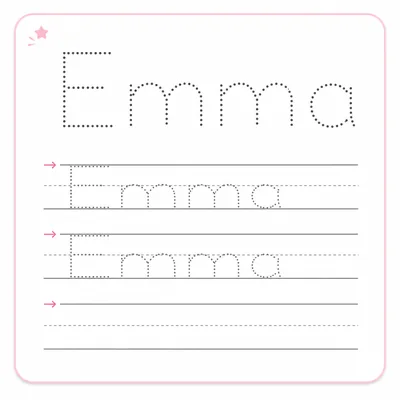
First-writing support
Start a name worksheet with one starting-point cue for each supported letter.
Open template arrow_forward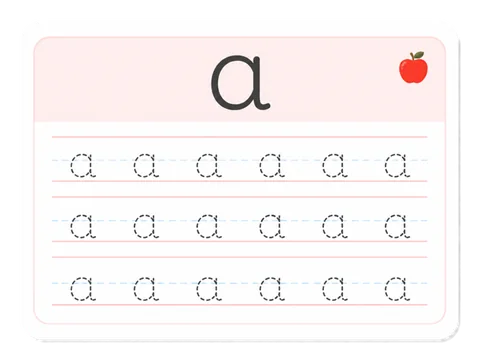
Lowercase practice
Trace lowercase a–z or focus on one letter or a custom letter set.
Open template arrow_forward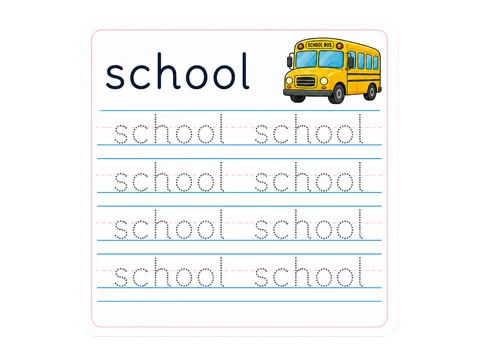
Phonics-friendly words
Trace short English words such as cat, dog, and sun with an editable word list.
Open template arrow_forward