A good fit when
- Capital letters are becoming familiar
- Straight and curved strokes still need guided practice
- The learner benefits from one case at a time
- Large letter forms are easier to control
Start with uppercase A–Z, or focus on one letter or a custom set. Adjust the writing size, repetitions, guides, and practice mode before printing.
Use this page for learners who recognize some capital letters and are ready to practice their larger, more consistent shapes.
Keep attention on one formation system at first, then reduce the tracing support as each capital becomes familiar.
Look at the capital example and notice its straight lines, curves, and overall height before tracing.
Follow the light letter forms across the handwriting guides without rushing between repetitions.
Switch to trace-and-write for a target letter once its shape can be followed consistently.
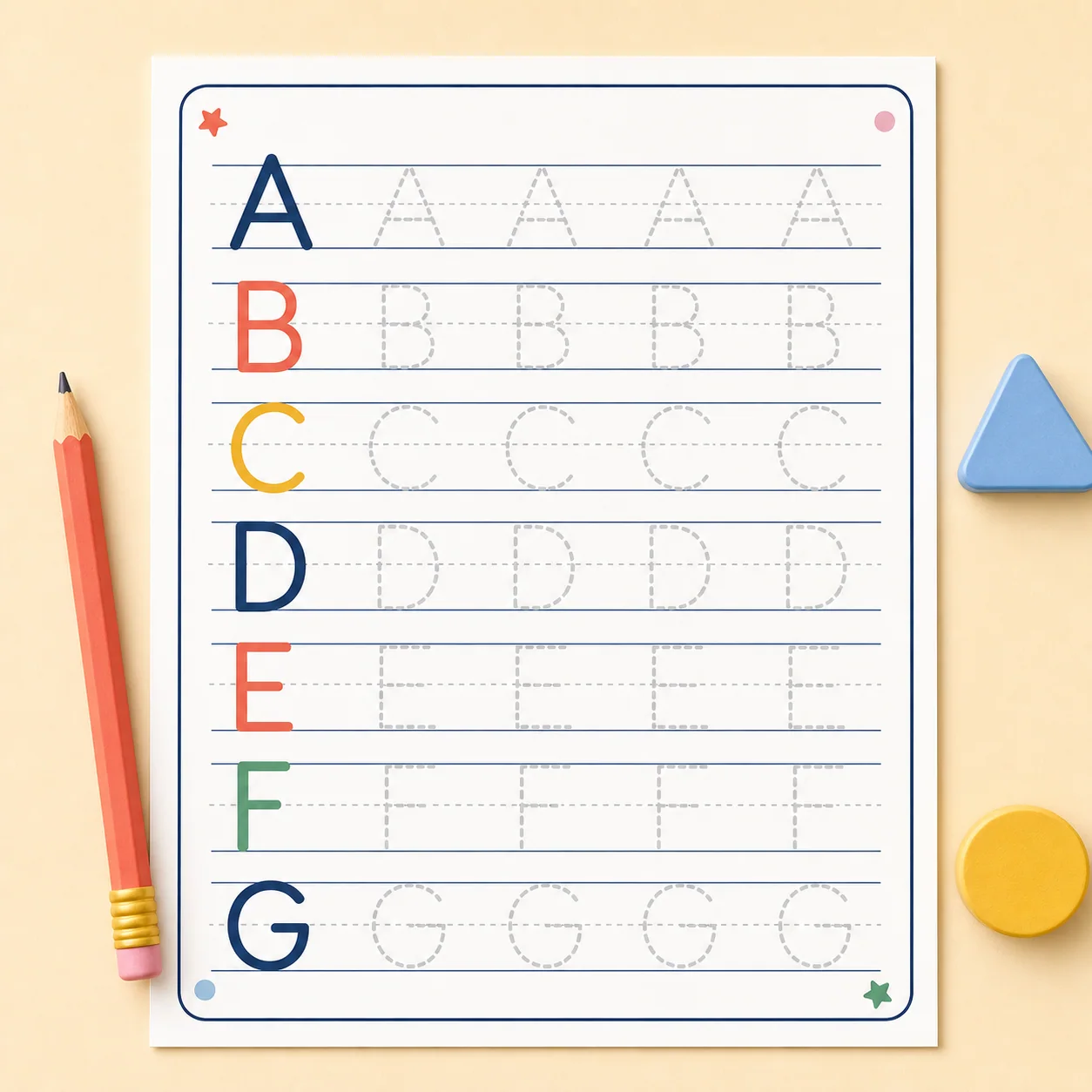
Choose one letter, a custom set, or the full A–Z alphabet.
The repeat control changes how often each selected capital appears.
Visible lines support consistent capital height and alignment.
Writing size, trace style, rows, and practice mode can be changed.
Preview the configured sheet before printing on either supported size.
Seeing and naming the target form reinforces its visual identity.
Tracing highlights the lines and curves that make each capital distinct.
Uppercase letters can be practiced at a steady size across the row.
Following the visible form supports deliberate movement through the shape.
Trace-and-write mode adds a gradual step beyond the model.
Focusing on capitals removes the extra job of switching between letter cases.
Repeated forms help the learner notice what remains consistent across each capital.
The same page can move from tracing toward blank writing before lowercase practice begins.
Adjust the letter range, repetition, writing size, and level of support for this worksheet.
Choose single-letter or custom-set mode and keep only a few target capitals.
Use a larger writing size and fewer repeats so each form has more space.
Try a clearer trace style and keep the handwriting guidelines visible.
Switch to trace-and-write and reduce repetition for a short independent attempt.
Move forward when the learner can reproduce the main capital shape, not simply after all 26 letters have appeared once.
Select a small letter set, large writing size, and trace-only practice.
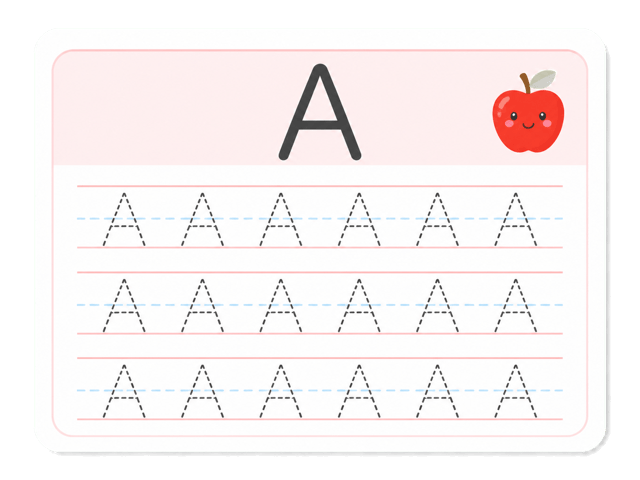
Expand the set and add a small amount of blank writing through trace-and-write.
Use mostly independent writing before beginning a separate lowercase formation system.
Continue into lowercase, connect both cases, or apply familiar capitals to a personalized name task.
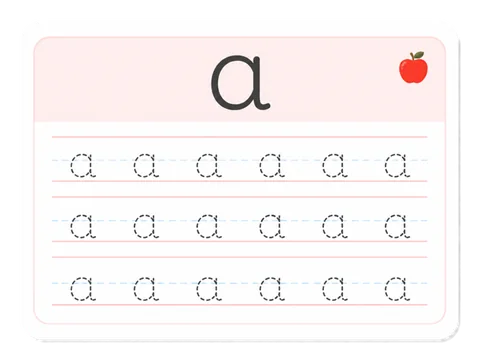
Lowercase practice
Trace lowercase a–z or focus on one letter or a custom letter set.
Open template arrow_forward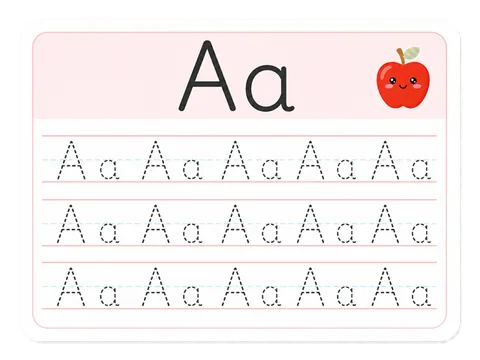
Case matching
Compare uppercase and lowercase forms side by side in one tracing worksheet.
Open template arrow_forward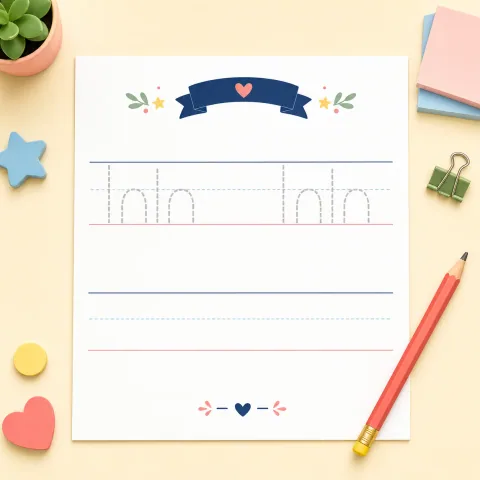
Full-name practice
Practice a first and last name together with adjustable tracing and writing support.
Open template arrow_forward